Plusmark

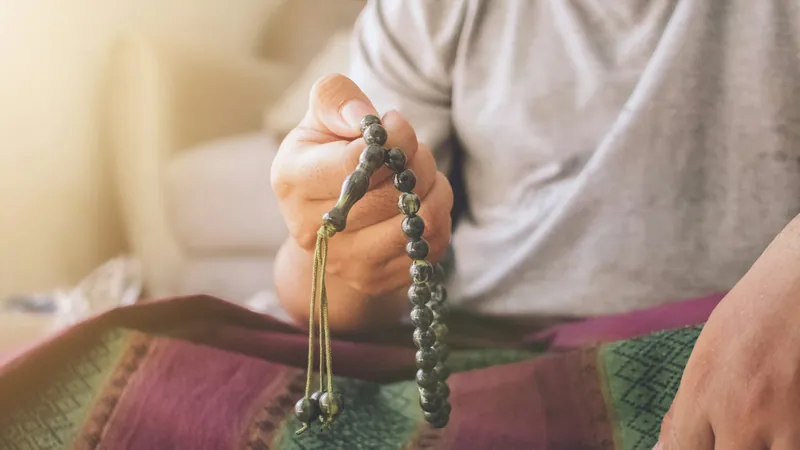
After each obligatory prayer, many Muslims say SubhanAllah (Glory be to Allah) 33 times, Alhamdulillah (Praise be to Allah) 33 times and Allahu Akbar (Allah is the Greatest) 34 times, which makes 100. Another common way is 33 of each, which makes 99, followed by one declaration of Allah's oneness to complete the hundred. Both come from hadith in Sahih Muslim. This guide explains the counts, where they come from, the variations you'll meet, and simple ways to keep count without losing your place.
The short version
- The usual order is SubhanAllah, Alhamdulillah, Allahu Akbar, said after the obligatory prayer.
- 33, 33, 34 makes 100. 33, 33, 33 plus the completing declaration also makes 100.
- Other narrations give other counts, such as 25 of each with the tahlil added. Practice varies between schools and teachers.
- Count on your fingers, a misbaha (prayer beads) or a counter. Treating each phrase as its own round of 33 keeps it simple.
What to say, step by step
- SubhanAllah (سبحان الله), 33 times.
- Alhamdulillah (الحمد لله), 33 times.
- Allahu Akbar (الله أكبر), 34 times. Or say it 33 times and finish with the declaration below.
The completing declaration is: La ilaha illallahu wahdahu la sharika lah, lahul-mulku wa lahul-hamdu wa huwa 'ala kulli shay'in qadir. Sunnah.com translates it as: "There is no god but Allah, having no partner with Him, to Him belongs sovereignty and to Him is praise due, and He is Potent over everything."
Most people say this dhikr where they prayed, soon after finishing, alongside the other remembrances they say after salah.
The narrations behind the counts
33, 33 and 34
Ka'b ibn 'Ujrah reported that the Messenger of Allah (peace be upon him) said that there are remembrances whose reciter "after every prescribed prayer will never be caused disappointment": Glory be to Allah thirty-three times, Praise be to Allah thirty-three times, and Allah is most Great thirty-four times (Sahih Muslim 596a).
33 of each, then the declaration
Abu Hurairah reported that whoever glorifies Allah after every prayer thirty-three times, praises Him thirty-three times and declares His greatness thirty-three times, "ninety-nine times in all", and completes the hundred with the declaration above, "his sins will be forgiven even if these are as abundant as the foam of the sea" (Sahih Muslim 597a).
25 of each, with the tahlil
Zaid ibn Thabit reported that the Companions were told to say 33, 33 and 34. A man of the Ansar then saw in a dream that they should say each one twenty-five times and add La ilaha illallah among them. When this was told to the Prophet, he said, "Do that" (Sunan an-Nasa'i 1350, graded hasan by Darussalam on sunnah.com). That way also comes to 100.
At bedtime
There's a well-known bedtime set too. 'Ali reported that the Prophet taught him and Fatimah to say Allahu Akbar, SubhanAllah and Alhamdulillah thirty-three times each when going to bed, as something better for them than a servant (Sahih al-Bukhari 6318). Narrations differ on which phrase is said a 34th time, so many people simply follow the way their family or teacher learned it.
Scholars and schools differ on details like these, and some people alternate between the versions. If you follow a teacher or a particular madhhab, follow their practice. This guide describes what's common and where it comes from; it isn't a ruling.

Fingers, a misbaha or a counter
Fingers. 'Abdullah ibn 'Amr said he saw the Messenger of Allah counting the tasbih on his fingers, and one version adds "with his right hand" (Sunan Abi Dawud 1502). Many people count on the joints of their fingers, touching each one in turn with the thumb. It takes a little practice to keep 33 straight this way, especially if your mind wanders.
A misbaha. Prayer beads, also called a tasbih or subha, usually have 33 beads, or 99 in three sets of 33 with a marker bead between the sets. Each set of 33 is one phrase, so the beads tell you when to move on. Scholars hold differing views on beads compared with fingers, and many consider both acceptable.
A counter. A clicker ring or a counter on your phone or watch does the same job as beads: it keeps the number so your attention can stay on the words.
Tips for keeping count
- Count each phrase as its own round of 33. You never have to hold more than 33 in your head.
- Feel for the end of a round. On beads it's the marker bead; on a counter it can be a buzz.
- Say each phrase fully. It's a remembrance, not a race, and slowing down also makes counting easier.
- Lost count? Many people go back to the last number they're sure of and carry on from there.
- Silence your phone first if you count on it, so nothing pops up halfway through.
Common mistakes
- Running the phrases together, so it isn't clear where one 33 ends and the next begins.
- Stopping at 99 when you meant to say a 34th Allahu Akbar or the completing declaration.
- Rushing to finish, which is when counts slip.
- Using an app full of ads or notifications that pull your attention away mid-dhikr.
Count it with Plusmark
If you'd like a counter that stays quiet, Plusmark has a Beads starter made for this. It gives a firm haptic tap every 33 counts, so you can feel the end of each phrase without looking: after the first buzz move on to Alhamdulillah, after the second to Allahu Akbar, and after the third (at 99) say one more Allahu Akbar, or the completing declaration, for 100.
- Starter: Beads, with a milestone haptic every 33. You can change it to any number, such as 25.
- Goal: At least 100, if you like. Tally marks fill towards it and there's a little celebration when you reach it.
- Each tap adds: 1.
- Resets: for a fresh 100 after each prayer, set it back to zero when you finish (Set Count in Edit Counter, or ask Siri, "Reset Beads in Plusmark", and Siri asks first). To see the whole day instead, set Resets to Daily and the goal to 500.
On Apple Watch you can tap the pad or use Double Tap, and the watch buzzes on every count. On iPhone, Lock Pad stops stray touches while you hold it, and the click sound stays off unless you turn it on. There are no ads and no account. The prayer bead counter guide has the full set-up, and if you also keep a daily count of seeking forgiveness, see counting istighfar 100 times a day.
Count it with Plusmark
Plusmark is the tally counter for iPhone, iPad, iPhone Duo and Apple Watch. Name a counter, tap the big + pad, and every tap is saved with its time, with goals, widgets and Siri.